
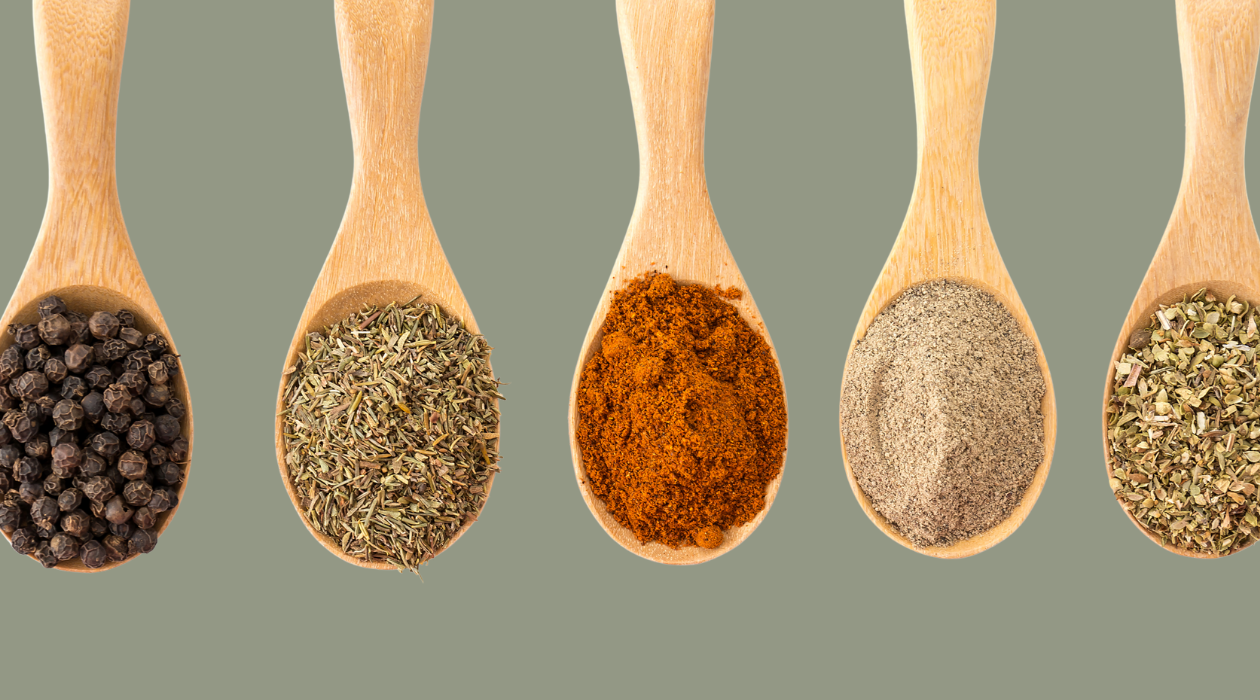
So often I am asked, “How can I make my food taste better without relying on more salt, sugar, or artificial ingredients?” Tune in for the strategies I use daily in my own kitchen that really work!
When food is deeply flavorful, homemade meals outpace restaurant fare easily. The aroma of sizzling garlic or sautéed onions can call everyone to gather in the kitchen and watch the meal unfold. Fresh herbs, spices, aromatics, acid-rich foods, and umami-rich ingredients help level-up dishes and hit all our taste buds for a five-star home dining experience.
The Flavor Framework: Build Every Meal in Layers
Once you understand this structure, even simple vegetables, grains, and proteins become restaurant-quality meals. Think of seasoning as building five layers of flavor:- Base aromatics (garlic, onion, scallion, leek)
- Herbs & spices (fresh and dried)
- Acid (citrus, vinegar, fermented foods)
- Umami/depth (savory richness)
- Finishers (fresh herbs, oils, zest, salt adjustments)
1. Aromatics: The Foundation of Flavor and Gut Support
Garlic
-
Contains allicin (activated when chopped/crushed)
-
Supports immune function and cardiovascular health
-
Adds depth to nearly every savory dish
Onions & Leeks
-
Rich in prebiotic fibers (support beneficial gut bacteria)
-
Contains quercetin (an anti-inflammatory compound)
-
Build sweetness and savory depth when sautéed slowly
Tip: Cook aromatics low and slow in olive oil for natural sweetness instead of burning them.
2. Herbs & Spices: Your Daily Anti-Inflammatory Toolkit
Fresh herbs (add at the end for maximum benefit, as heat will kill the delicate nutrients in them)
- Parsley: supports detox pathways, freshens flavor
- Cilantro: may support heavy metal binding
- Basil: antimicrobial and brightens dishes
- Dill & mint: digestive support and cooling effect
Dried spices (best when heated to “wake them up” in oil)
- Turmeric: anti-inflammatory (pair with black pepper for absorption)
- Cumin: supports digestion and bile flow
- Coriander: gentle gut soothing
- Cinnamon: helps stabilize blood sugar
- Ginger: anti-nausea, warming, digestion-enhancing
Cooking tip: Add dried spices to oil for 30–60 seconds before adding liquids—this unlocks aroma and potency.
3. Acid: The Missing Flavor Lever
Acid is what makes food taste “finished.”
- Fresh citrus juice (lemon/lime):
- Brightens flavors
- Enhances iron absorption from plant foods
- Reduces the need for excess salt
- Apple cider vinegar:
- May support post-meal blood sugar balance
- Adds tang to dressings and marinades
- Reduced balsamic vinegar:
- Concentrated sweetness
- Works well on roasted vegetables, meats/chicken/fish, fruits, salads, to enhance sauces
Rule of thumb: If a dish tastes flat, it almost always needs acid—not more salt.
4. Umami: The “Fifth Taste” That Creates Satisfaction
Umami is what makes food feel rich, savory, and satisfying. It’s a key reason people stay full and don’t snack unnecessarily.
Natural whole-food sources include:
- Mushrooms (especially when roasted or sautéed deeply)
- Tomatoes (especially cooked or sun-dried)
- Seaweed (nori, dulse flakes)
- Aged or fermented foods (in moderation)
- Coconut aminos (soy-free savory alternative)
Coconut aminos
- Slight sweetness and deep savory flavor
- Works in stir-fries, marinades, and dressings
- Lower-sodium alternative to soy sauce
5. Finishing Touches: Where Restaurant Flavor Comes From
This is the step most home cooks skip, but chefs never do.
- Fresh herbs added at the end (brightness)
- Citrus zest (aromatic oils)
- Extra virgin olive oil drizzle (mouthfeel and richness)
- Flaky salt adjustment (final balance)
These small additions can completely transform a dish without adding complexity.
Putting It All Together: A Simple Formula
When cooking any whole food meal, ask:
- Did I build a base with aromatics?
- Did I add at least one spice or herb?
- Did I include acid for brightness?
- Did I include something umami-rich?
- Did I finish it with freshness or fat?
If yes, you’ve created a meal that is:
- More satisfying and antioxidant-rich
- Easier to digest
- Less likely to trigger cravings
- More nutrient-dense
- Fun to make again and share with others who appreciate your fine seasoning skills!
You can download your own flavor cheat sheet here to use in your kitchen the next time you're cooking a meal to incorporate these ideas.


